Skip to content

How we test helmets

Every helmet sold in the UK and Europe must pass the same minimum safety standard, according to EN 1078. Passing tells you nothing about how well one helmet protects compared with another. HIPER is an independent rating developed by experts in brain biomechanics that tests helmets in conditions that represent real cycling crashes. It helps you choose a safer helmet, and helps manufacturers aim their designs at real-world safety.

The rating method

How a helmet is rated

Every helmet is tested with 12 impacts.

  1. 1

    The impact

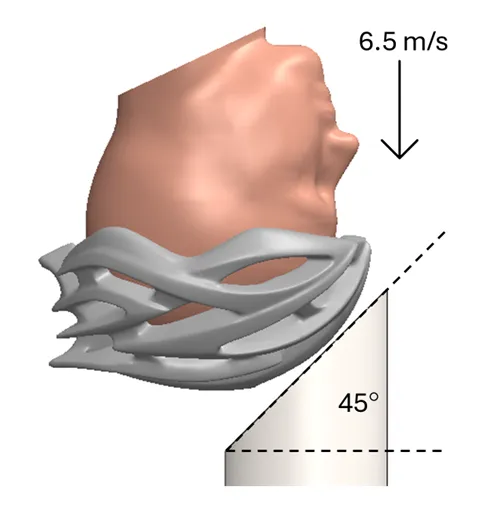
    A headform wearing the helmet hits an anvil tilted at 45° at 6.5 m/s. The angle makes the head rotate, as it does when a cyclist's head strikes the road at an angle.

    6.5 m/s

    Around 20% faster than the European helmet standard (EN 1078), which tests at up to 5.4 m/s.

    • 45°Anvil angle
    • 4Places on the helmet
    • 3Repeats at each place
    The helmeted headform moving down at 6.5 m/s onto an anvil angled at 45 degrees.
  2. 2

    Why we test this way

    Every test condition comes from our review of real cyclist crashes.

    • 6.5 m/sSpeedOur review of published studies found that cyclists' heads hit at speeds concentrated around 5 to 8 m/s. We test at 6.5 m/s, within that range.
    • 45°AngleA cyclist's head rarely hits a surface straight on. In reconstructions and simulations of real crashes, the angles are concentrated between 30° and 60°. We test at 45°.
    • 80%Flat surfaceIn nearly 80% of cases the head hits a flat surface, so we test on a flat anvil.
    • 80-gritRough surfaceAbrasive paper on the anvil creates large friction forces and more head rotation. It represents the upper limit of friction, and CEN/TC158/WG11 has adopted it too.

    Four places on the helmet

    Each place makes the head spin mainly about a different axis through the centre of the head:

    • X runs from the back of the head to the front.
    • Y runs from side to side.
    • Z runs from the neck up through the top of the head.
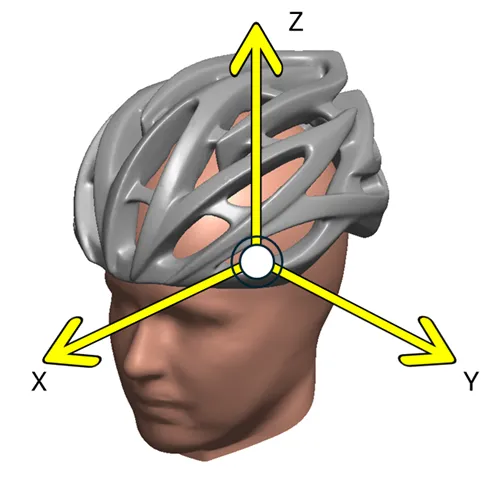
    A helmeted headform with the three head axes: X pointing forward out of the face, Y pointing to the side and Z pointing up through the top of the head.
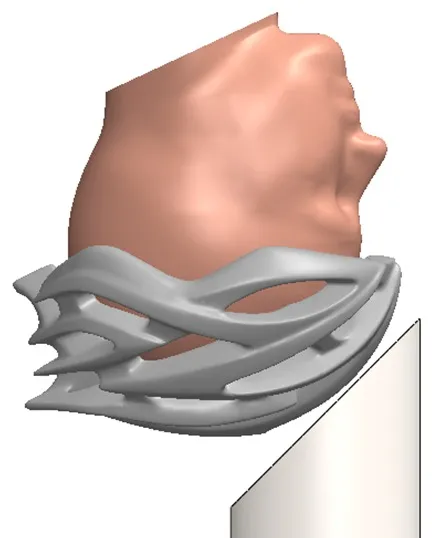
    • CAD view of the EN 17950 headform and helmet positioned on the 45° anvil for the front impact.

      Front

      Spins mainly about Y: a nodding motion.
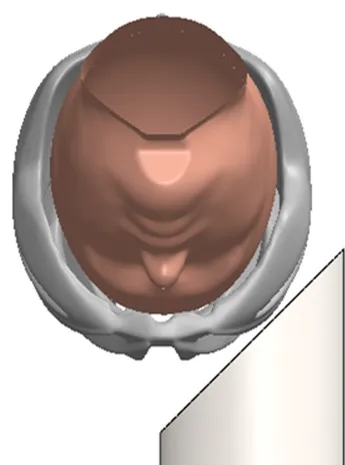
    • CAD view of the EN 17950 headform and helmet positioned on the 45° anvil for the front-side impact.

      Front-side

      Spins mainly about Z: a turning motion.
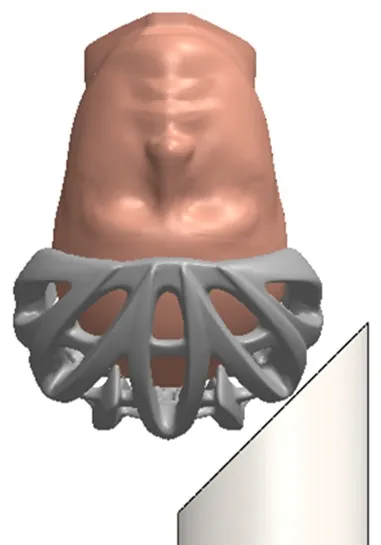
    • CAD view of the EN 17950 headform and helmet positioned on the 45° anvil for the side impact.

      Side

      Spins mainly about X: a tilting motion, ear towards shoulder.
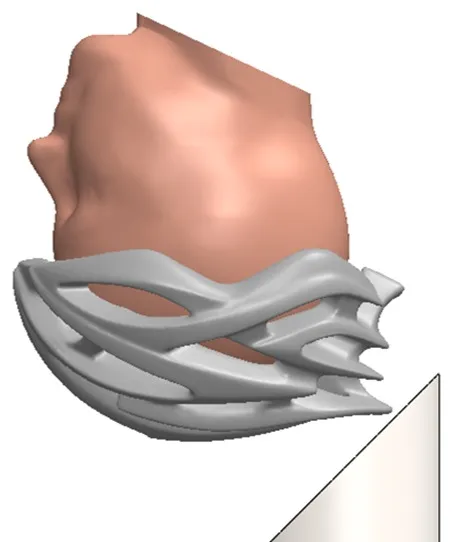
    • CAD view of the EN 17950 headform and helmet positioned on the 45° anvil for the rear impact.

      Rear

      Spins mainly about Y: a nodding motion.

  3. 3

    What the headform feels

    Sensors inside the headform record how fast it speeds up and how fast it spins along the three axes, 20,000 times a second. The black line is the resultant, the combination of all three. In this front impact the head spins mostly about the Y axis, a nodding motion. The g-force is over in about 12 milliseconds, far quicker than a blink. Press play to watch the first 15 milliseconds 200 times slower, or drag across the charts.

    Time 15.0 ms

    Tap to show or hide a line
    Linear acceleration (g)Resultant 0.6X 0.3Y -0.3Z 0.5
    -100-5005010003691215Time (ms)
    Angular velocity (rad/s)Resultant 16.7X -1.0Y 16.3Z 3.4
    -50510152003691215Time (ms)
  4. 4

    From the peaks to injury risk

    The peaks go into two injury risk curves from the scientific literature. Peak linear acceleration, the g-force on the head, predicts skull fracture and bleeding on the surface of the brain. The Brain Injury Criterion (BrIC), worked out from how fast the head spins about each of its three axes, predicts injury deep inside the brain. The two risks are averaged into one risk for the impact. Every helmet is tested three times at each of four places, 12 impacts in all.

    Linear injury risk112 g gives 13.6%
    0%25%50%75%100%0100200300400500600Peak g-force (g)
    Rotational injury riskBrIC 0.32 gives 15.8%
    0%25%50%75%100%00.30.60.91.2Brain Injury Criterion (BrIC)
  5. 5

    Weighted by where real heads are hit

    Some parts of the head are hit far more often than others. We reviewed real cyclist crashes to find out how often each region is hit. Each place we test counts in proportion to how often that region is hit, so the rating reflects how crashes really happen. The front is hit most, so we test it at two places: the front and the front-side.

    We do not test the crown. It is hit least often, and helmet standards already test it.

    Source: Baker et al. (2023), n = 815 impacts. Head map after Baker et al. (2023); test locations are approximate.
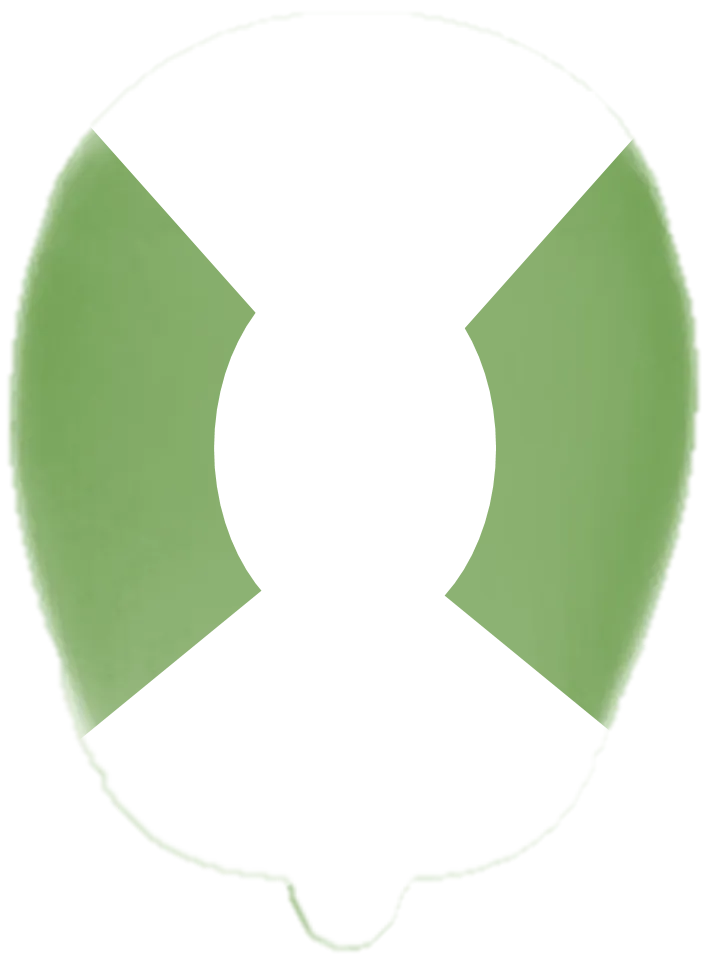

    HIPER test location

    Share of head impacts

    • Front38.2%
    • Side28.7%
    • Rear20.3%
    • Crown (not tested)13.0%
  6. 6

    The Protection Score and medal

    Adding up the weighted risks gives the helmet's overall risk. The Protection Score is the overall risk turned around so that higher is better: a score of 100 would mean no risk. The score sets the medal. The medal lines are fixed, so a helmet's medal never depends on which other helmets we test. Every helmet sold in the UK must pass the EN 1078 standard, which guarantees a baseline level of protection, so every helmet we rate gets a medal.

    Try it: move the slider to change the overall risk.

    Protection Score77.0 /100

    MedalGold

    Bronze
    Silver
    Gold
    Platinum
    Diamond

Published research

HIPER is built on peer-reviewed research from the HEAD Lab at Imperial College London. These are our published studies on cyclist head injuries and helmets.

  1. 2024 · Annals of Biomedical Engineering

    How Well Do Popular Bicycle Helmets Protect from Different Types of Head Injury?

    Claire Baker, Xiancheng Yu, Brian Lovell, Ruth Tan, Saian Patel, Mazdak Ghajari

    What we found

    We tested the 30 most popular helmets among UK cyclists under angled impacts like those in real crashes. Protection varied a lot between helmets, especially against the rotation that causes diffuse brain injury. Helmets with rotation-management technology such as MIPS reduced head rotation, and more expensive helmets were not safer.

    Read the paper →
  2. 2023 · Annals of Biomedical Engineering

    A Review of Cyclist Head Injury, Impact Characteristics and the Implications for Helmet Assessment Methods

    Claire Baker, Xiancheng Yu, Saian Patel, Mazdak Ghajari

    What we found

    We reviewed real-world cyclist collisions to find how heads are actually hit. Helmets greatly reduce skull fractures and bleeding on the brain, but less so diffuse brain injury, likely because helmet standards do not test for head rotation. Across 1,809 head impacts, the side and front of the head were hit most often. These findings shaped the HIPER test conditions.

    Read the paper →
  3. 2026 · Accident Analysis & Prevention

    Demographic and Causal Patterns in Child Cyclist Head Injuries: Informing Helmet Test Methods

    William Dawber, Claire Baker, David Sharp, Shruti Agrawal, Mazdak Ghajari

    What we found

    We analysed more than 48,000 head injury cases in child cyclists. Injuries were most common in boys aged 10 to 13, often from losing control rather than a collision, while collisions with motor vehicles dominated the most severe cases. These patterns differ from the conditions used to test children's helmets today.

    Read the paper →
  4. 2026 · SSRN (preprint)

    Who Wears a Helmet and Why? A Quantitative Analysis of Helmet Use, Barriers, and Purchase Priorities in 1,938 Cyclists

    William Dawber, Claire Baker, Saian Patel, Mazdak Ghajari

    What we found

    We surveyed 1,938 cyclists about helmet use. Use depended most on why people ride, and was lowest among men, younger riders, commuters and urban cyclists. Fit, comfort and safety rating were the things buyers cared about most.

    Read the paper →
  5. 2026 · Proceedings of the IRCOBI Conference, Munich

    A Comparative Study of Injury Risk in Collapsible and Conventional Bicycle Helmets

    William Dawber, Xiancheng Yu, Vahid Darvishi, Mazdak Ghajari

    What we found

    We compared six collapsible helmets with 24 popular conventional helmets under angled impacts like those in real crashes. Collapsible helmets showed slightly higher overall and linear injury risk, while protection against rotational injury was similar. They were also around 50% heavier, and adding rotational protection technology could help close the gap.

    Read the paper →
  6. 2024 · Annals of Biomedical Engineering

    An Assessment of Sikh Turban's Head Protection in Bicycle Incident Scenarios

    Xiancheng Yu, Gurpreet Singh, Amritvir Kaur, Mazdak Ghajari

    What we found

    We tested five Sikh turbans under impacts representing bicycle incidents and compared them with bicycle helmets. Protection varied widely between turbans depending on wrapping style and fabric. We propose ways to improve turbans, such as adding energy-absorbing layers and reducing friction between the fabric layers.

    Read the paper →
  7. 2023 · Bioengineering

    In-Depth Bicycle Collision Reconstruction: From a Crash Helmet to Brain Injury Evaluation

    Xiancheng Yu, Claire Baker, Mike Brown, Mazdak Ghajari

    What we found

    We developed a way to assess brain injury in a real bicycle and vehicle collision using only the cyclist's crash helmet. By recreating the damage on identical helmets in our lab, we showed the cyclist sustained a severe impact large enough to cause mild to moderate traumatic brain injury.

    Read the paper →
  8. 2022 · Accident Analysis & Prevention

    Computational Prediction of Head-Ground Impact Kinematics in E-Scooter Falls

    Pasinee Posirisuk, Claire Baker, Mazdak Ghajari

    What we found

    We simulated 180 e-scooter falls caused by potholes. Deeper potholes suddenly made falls much more likely, and every fall produced an angled head impact at about the same speed used in bicycle helmet standards. Riding more slowly reduced the head impact speed and force.

    Read the paper →
  9. 2022 · Frontiers in Bioengineering and Biotechnology

    Oblique Impact Responses of Hybrid III and a New Headform with More Biofidelic Coefficient of Friction and Moments of Inertia

    Xiancheng Yu, Peter Halldin, Mazdak Ghajari

    What we found

    We compared the widely used Hybrid III headform with a new headform whose mass distribution and skin friction are closer to a real human head. In angled impacts, the new headform gave much lower head rotation and brain strain, showing that realistic headforms are needed for accurate helmet testing. HIPER tests with a headform developed from this original design.

    Read the paper →
  10. 2021 · Annals of Biomedical Engineering

    A New Assessment of Bicycle Helmets: The Brain Injury Mitigation Effects of New Technologies in Oblique Impacts

    Fady Abayazid, Ke Ding, Karl Zimmerman, Helena Stigson, Mazdak Ghajari

    What we found

    We tested 27 bicycle helmets, including designs with MIPS, SPIN, WaveCel and an airbag, under angled impacts and used a computer model to estimate brain strain. Most helmets with these new technologies reduced head rotation and brain strain compared with conventional helmets, and different technologies worked best for different impact directions.

    Read the paper →
  11. 2021 · Annals of Biomedical Engineering

    Ranking and Rating Bicycle Helmet Safety Performance in Oblique Impacts Using Eight Different Brain Injury Models

    Madelen Fahlstedt, Fady Abayazid, Matthew Panzer, Antonia Trotta, Wei Zhao, Mazdak Ghajari, Michael Gilchrist, Songbai Ji, Svein Kleiven, Xiaogai Li, Aisling Ní Annaidh, Peter Halldin

    What we found

    We compared how eight computer models of the brain rank and rate the same 17 bicycle helmets. The ranking depended on which model was used, and one helmet scored two stars with one model but four with another. Rating methods need an agreed approach so consumers are not confused.

    Read the paper →