About Hiper

The HIPER project, short for Helmet Impact Protection Effectiveness Rating, is dedicated to creating an evidence-based rating system to help consumers understand the safety performance of cycle helmets on UK roads. This involves developing a test protocol and rating system that assesses both linear and rotational risks, determining the risk of skull fracture and focal injuries as well as the risk of diffuse brain injuries such as concussion. Current standards for cycle helmets only consider skull and focal injuries. Our vision is to continually expand and update the rating system in line with scientific research and market changes, encouraging manufacturers to enhance technology and improve cyclist safety.

Who we are
We are researchers at the HEAD lab, Dyson School of Design Engineering, Imperial College London, with over 15 years experience in the fields of Brain Biomechanics and Helmet Testing. Our work has been extensively published in prestigious peer-reviewed scientific publications and contributes to advancements in the fields of engineering and medicine. We are members of international helmet standards committees, where we contribute to the development of next generation helmet safety standards. We also work closely with helmet manufacturers to guide the development of novel and improved helmet designs.

What is hiper?
Hiper is an independent helmet rating programme, developed based on state-of-the-art knowledge of brain injury biomechanics and evidence from real-world data. It addresses a gap between helmet standards, which ensure minimum safety of helmets sold on the market, and a range of choices that consumers are facing when purchasing a helmet. It provides objective information about helmet safety performance and aims to inform consumers who choose to wear a helmet. The hiper testing methodology is aligned with the latest developments in helmet standards. This helps manufacturers to leverage their effort into meeting future standards to improve their products beyond the minimum requirements. In long-term, hiper will lead to an improvement in helmet safety, a reduction in head injury rates, and a safer experience for cyclists.
Our methodology
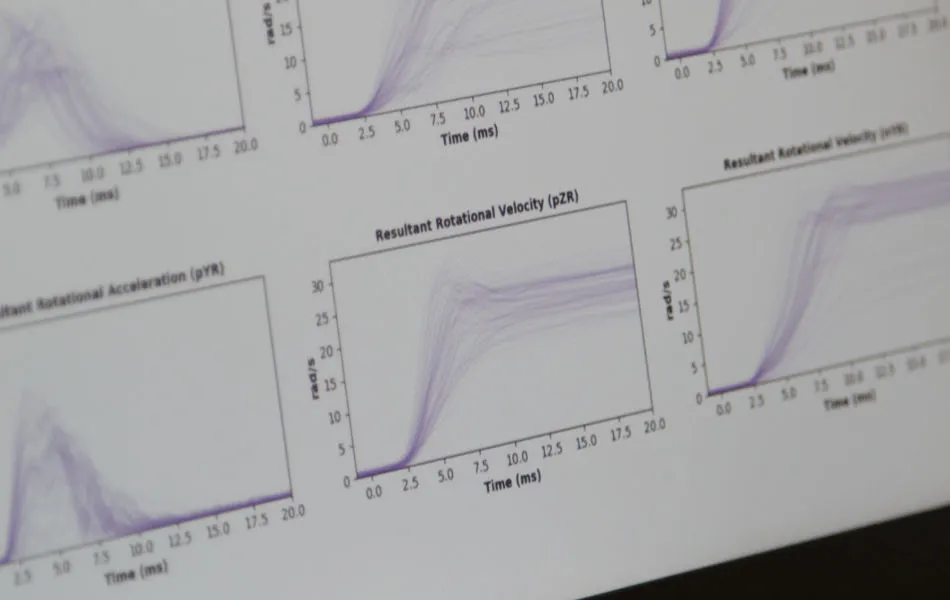
Head injuries have two generalised mechanisms. Focal injuries, such as a skull fracture, are concentrated to one area and are generally associated with forces that act directly in a straight line to the head. Diffuse injuries, such as concussion and axonal injuries, occur throughout the brain tissue and are caused by the lagging motion of the brain inside of the skull, most associated with forces that cause rotation of the head. To establish helmet safety performance, we measure the risks of linear and rotational induced injuries when wearing each helmet, using a biofidelic headform. We impact each helmet design at conditions that reflect how accidents happen in the real world, which takes 12 impacts total. We condense the injury risk results into a single granular value to rate each helmet on its ability to mitigate risks of head injuries overall.
HIPER is funded by the Road Safety Trust.
The Trust funds, but is not responsible for, the contents of this website.